
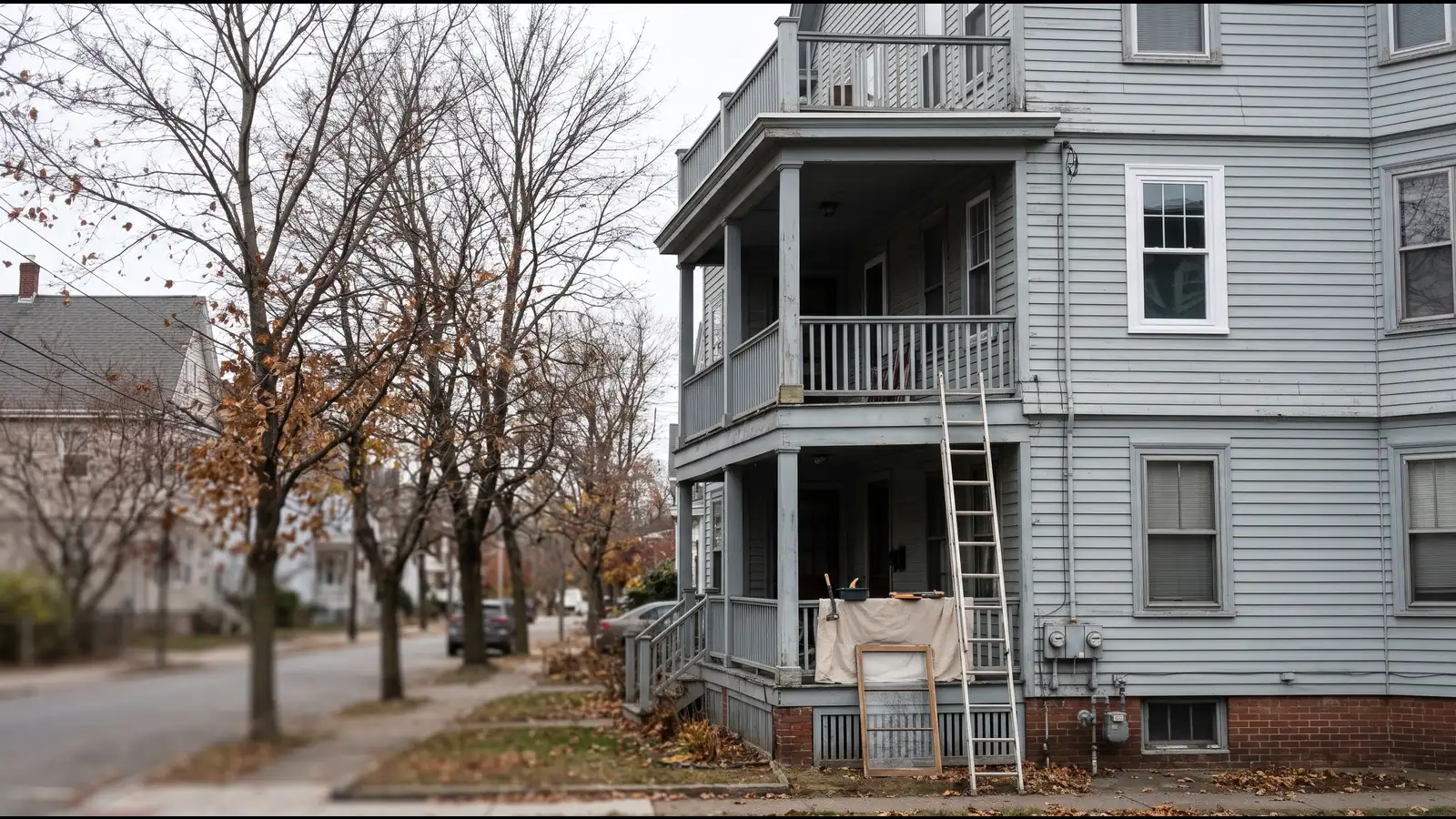
Triple-Decker Window Replacement Types
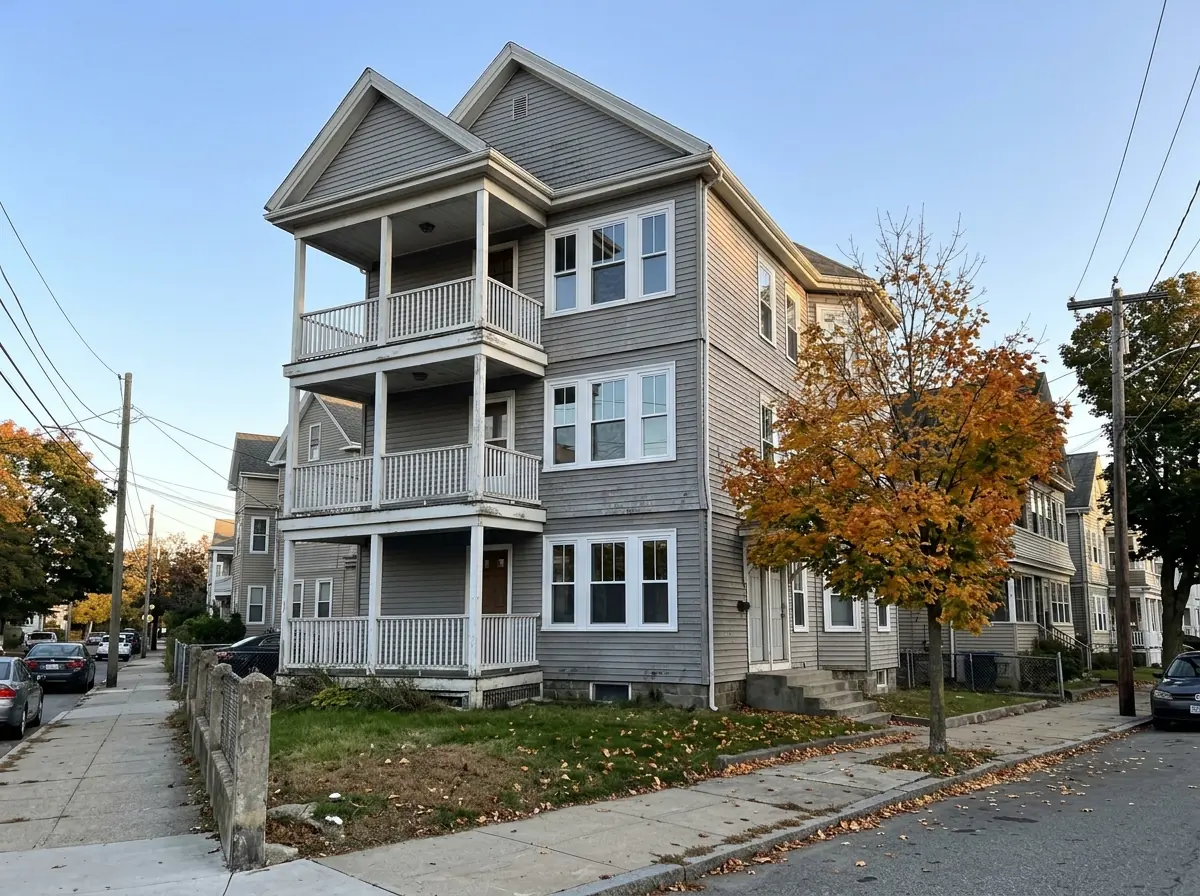
Whole-Building Replacement for Owners and Landlords
Two- to four-unit buildings make up a big share of Lowell's housing: 16.2% of units are in two-unit buildings and 10.4% in three- or four-unit buildings. Replacing every window at once spreads trip and setup costs over more openings, and national guides price by window count: HomeAdvisor's ranges are about $12,000 to $15,000 for 16 to 20 windows and $15,000 to $18,000 for 20 to 24. Ask for one written scope that lists each unit's windows, the method for each opening (see full-frame vs insert) and the order units will be done in, so tenants know their day. An owner-occupied three-family is inside the state home improvement contract rules; a building the owner doesn't live in falls outside them (HIC rules).
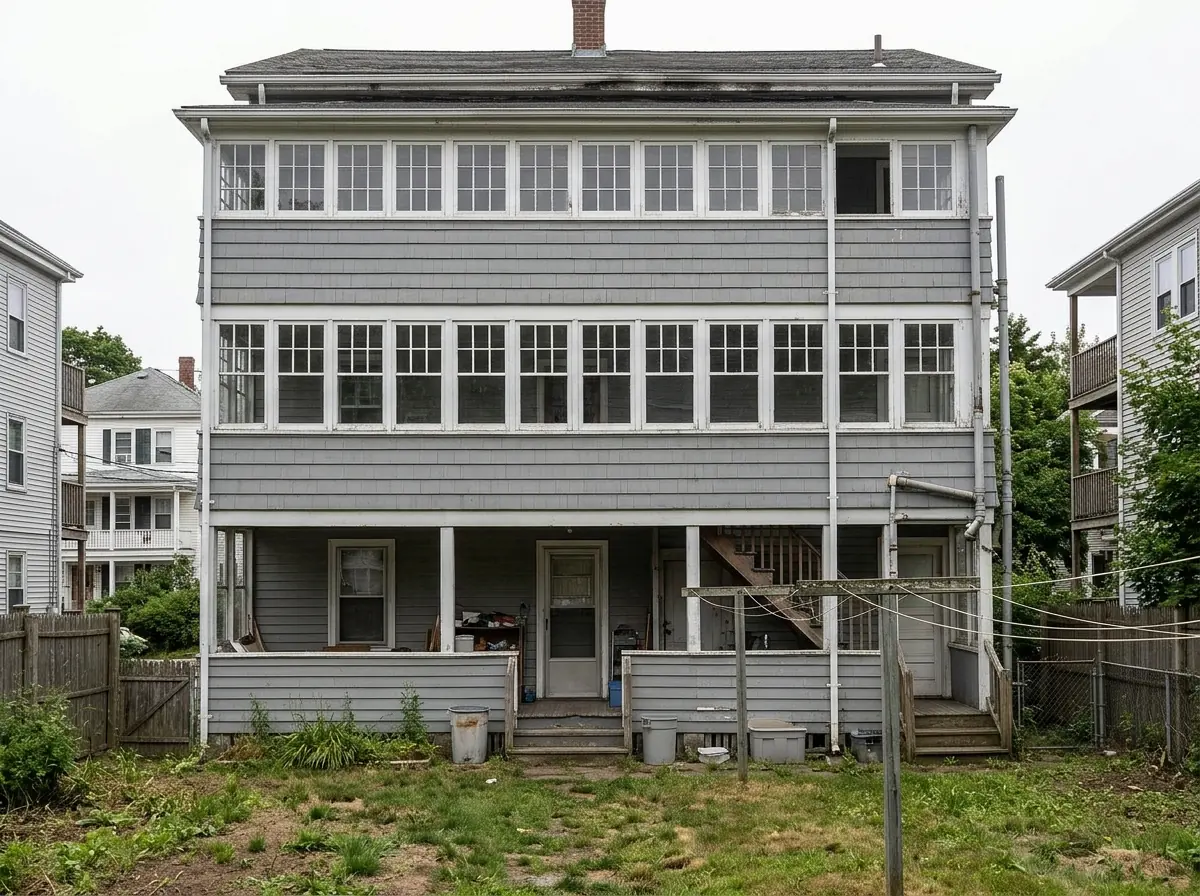
Enclosed Front and Rear Porch Windows
On an enclosed porch, the windows sit in the porch's own framing rather than the main house wall. A good installer will check that framing and the sill under the band for rot before quoting an insert, because an insert depends on the old frame being sound. If the porch is a shared stair or hall, it counts as a common area under the lead rules below, and every unit it serves gets notice. Openable porch windows that rent with a unit also need screens in season under the sanitary code.
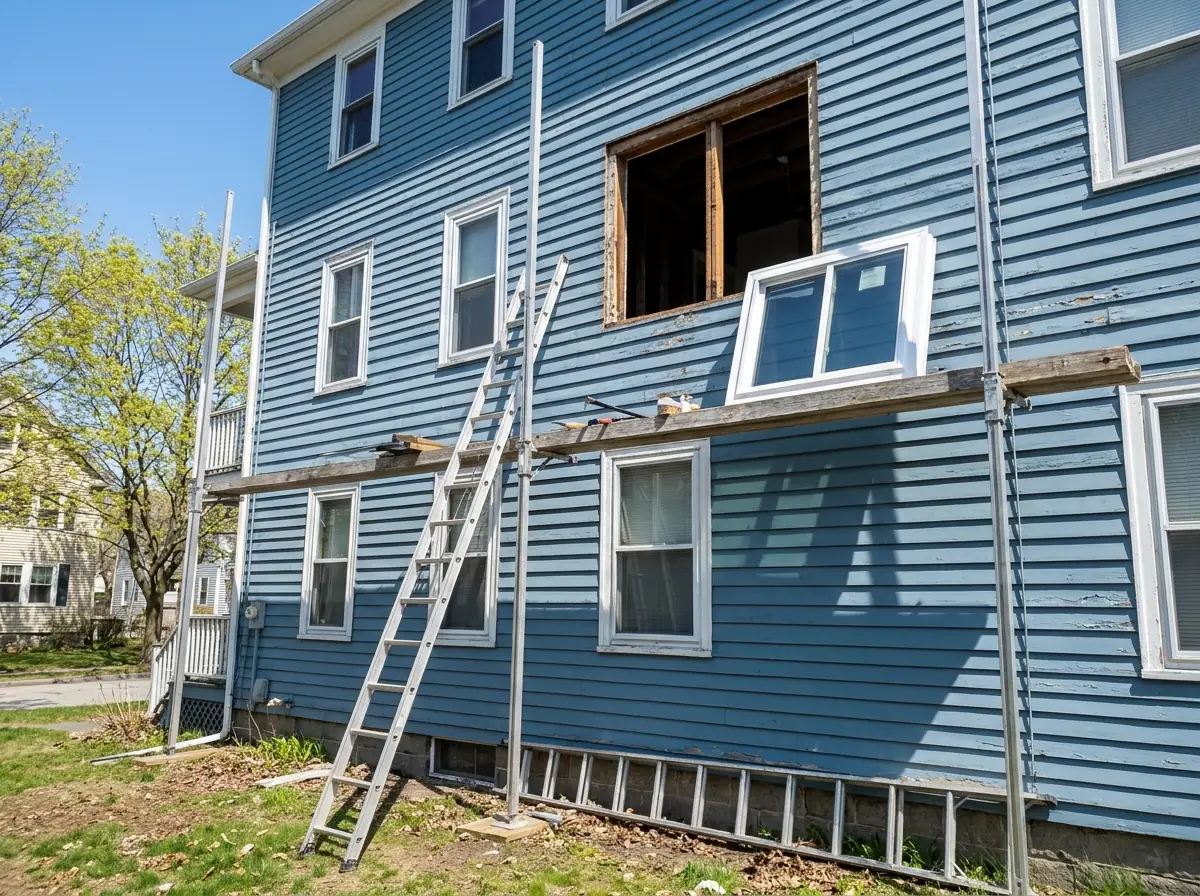
Third-Floor Work and Staging
Height drives labor. HomeAdvisor contrasts a two-hour single window in a newer one-story house with six hours or more for a third-floor window in an old row house, and puts installer rates at about $40 to $65 an hour. On a triple-decker that gap shows up on every top-floor opening. Ask the contractor how they will reach each floor (ladders, staging or a lift), whether the units come in from inside or outside, and whether access is priced per window or per building.
Deleading Rental Units Under the MA Lead Law
The Massachusetts Lead Law requires an owner to abate or contain lead paint hazards whenever a child under six lives in the unit, and a new owner has 90 days to do it after a purchase. State regulations (105 CMR 460) set out what that means at a window:
- Moveable impact surfaces: sashes, wells, parting beads, stops and sills on windows with sills five feet or less from the floor, stair tread or ground.
- Accessible, mouthable surfaces: window sills five feet or less from the floor, which must be deleaded.
- Replacement counts: replacing the painted element is one form of abatement; new components go in unfinished unless the inspector retests them.
- Metal windows: only the sills need abatement or containment.
- Dust clearance: windowsill lead dust below 250 micrograms per square foot.
The state deleading credit counts window unit replacement as deleading, and it needs a licensed inspector's letter of compliance.

Why Lowell homeowners call Lowell Window Replacement
- One independent window contractor gets your request
- Ask for the HIC number: MA contracts must show it
- Written contract on any job over $1,000
- The call and the referral are free
Lead-Safe Window Replacement Rules in Pre-1978 Buildings
Federal RRP rules require firms that disturb lead paint in homes built before 1978 to be certified and to use certified renovators. Massachusetts runs its own program through the Department of Labor Standards: window installers working on pre-1978 housing must be licensed Lead-Safe Renovation Contractors. Window replacement is never treated as minor repair, so no job is too small to be covered. The federal work practices give a sense of what a compliant job looks like:
Notice
the lead pamphlet goes to the owner, and to an adult occupant of a rented unit, no more than 60 days before work.Signs
posted at the work area, in the occupants' language where practicable.Inside
taped plastic on the floor at least 6 feet beyond the work.Outside
doors and windows within 20 feet closed, plastic on the ground 10 feet out, and vertical containment if the work is within 10 feet of the property line.Banned methods
no open-flame burning; heat guns only below 1,100°F; power sanding only with a HEPA-shrouded tool.Cleanup check
each windowsill is wiped and compared with a cleaning verification card before the signs come down.
Ask for the firm's state lead-safe license number in writing, and ask how they will contain the porches and stair halls between units.
Landlord Rules and Deleading Money in Lowell
The State Sanitary Code makes the owner keep the building watertight and the windows weathertight: panes in place and sealed, sashes that open and close without excessive effort, and no more than a 1/8 inch gap around a double-hung sash (1/16 inch on a casement), unless a storm window is fitted. Screens on openable windows must be up from April 1 to October 31; half screens satisfy the rule on double-hungs.
For the cost of deleading windows:
State tax credit
the lesser of the cost or $1,500 per unit for full compliance; half the cost up to $500 for interim control.Get the Lead Out loans
MassHousing lends up to $30,000 to $45,000 by property type, at low or no interest, for owner-occupants and for investors renting to income-eligible tenants. Lowell Planning and Development is listed as a participating local agency.
A bedroom window being replaced in a rental still has to meet egress size.