
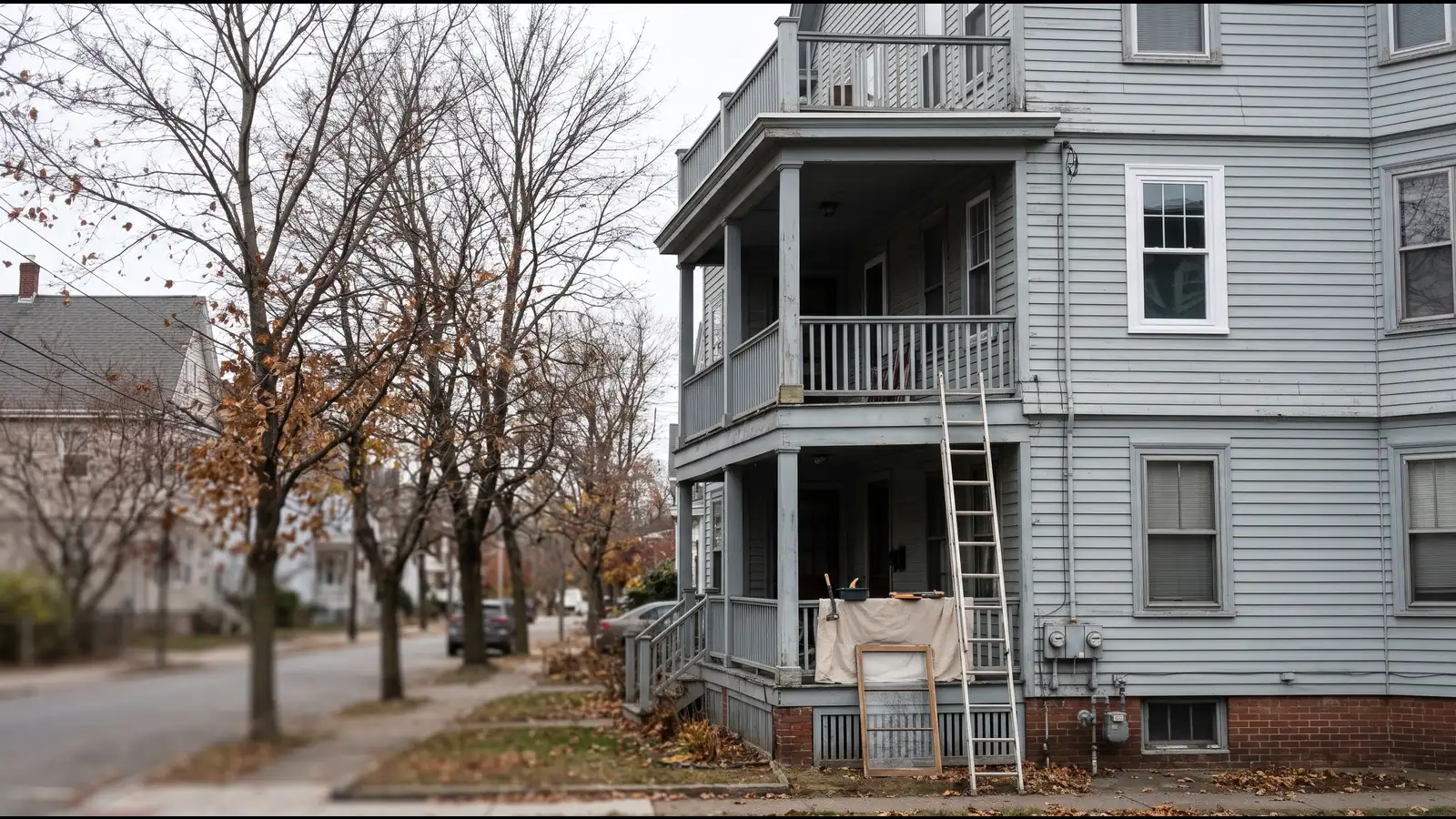
Window Replacement Methods: Insert, Full-Frame and Nail-Fin
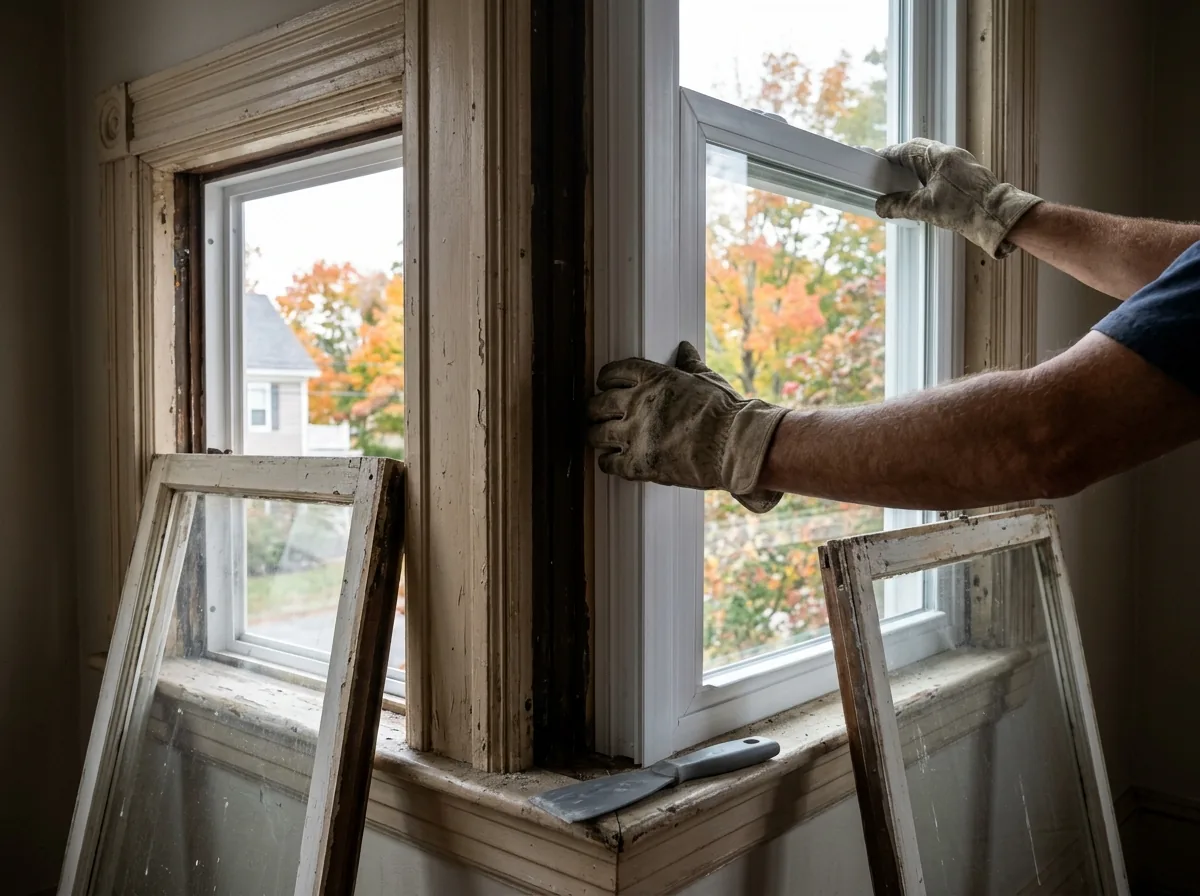
Insert (Pocket) Window Replacement
An insert, also called a pocket or retrofit window, is a complete unit that slides into the old frame after the sashes come out. The old frame, the exterior trim and the siding all stay, and only the interior stops come off. HomeAdvisor's figures put the labor at about $100 to $300 per window, and This Old House notes that an insert slightly reduces the glass area. It only works when the old frame is square, level and free of rot, because the insert relies on that frame to keep water and air out.
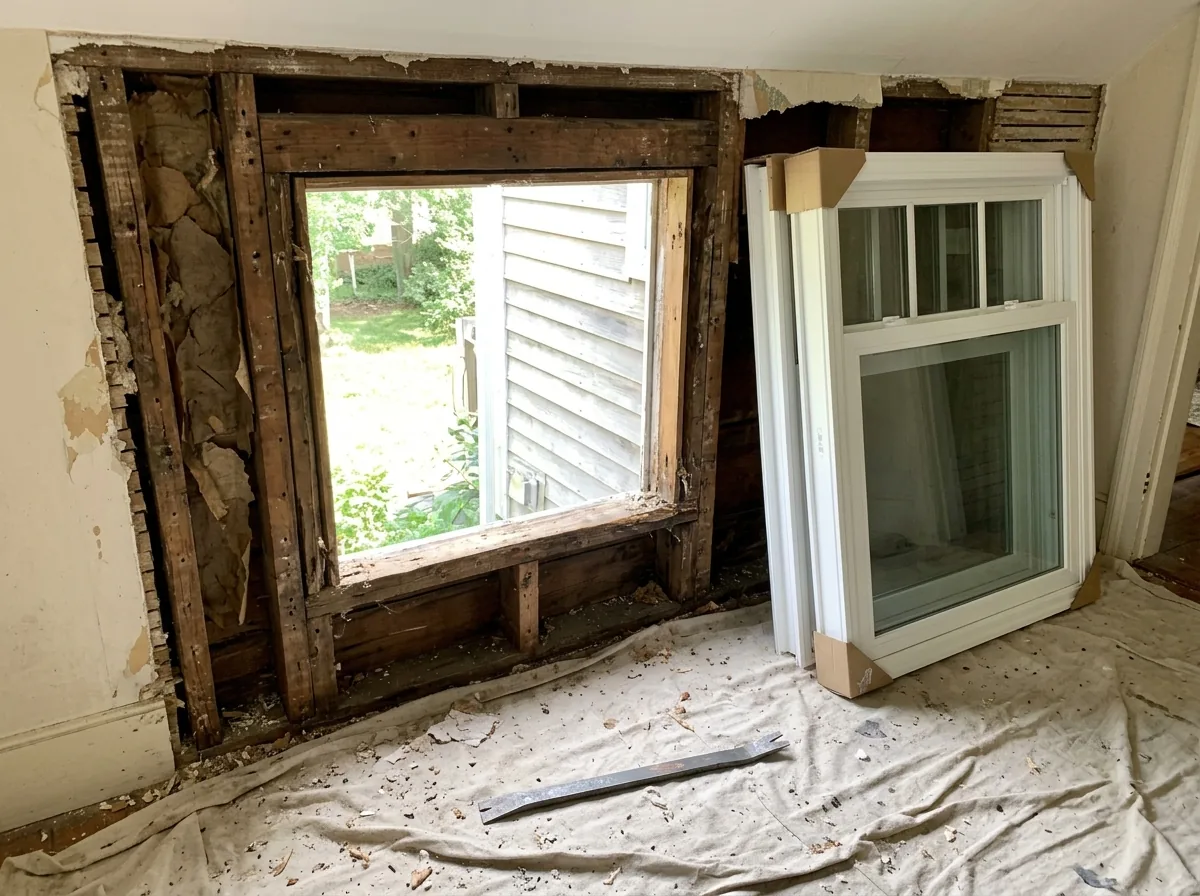
Full-Frame Tear-Out Replacement
A full-frame replacement removes the head, side jambs and sill down to the rough opening, then sets a new window with its own frame. The installer can see and repair water damage that an insert would cover, and the window style or size can change. A flangeless full-frame unit goes into the existing opening without peeling back siding. Expect labor of about $150 to $800 per window in HomeAdvisor's figures. Pick it when frames are rotted, warped, out of square or leaking.
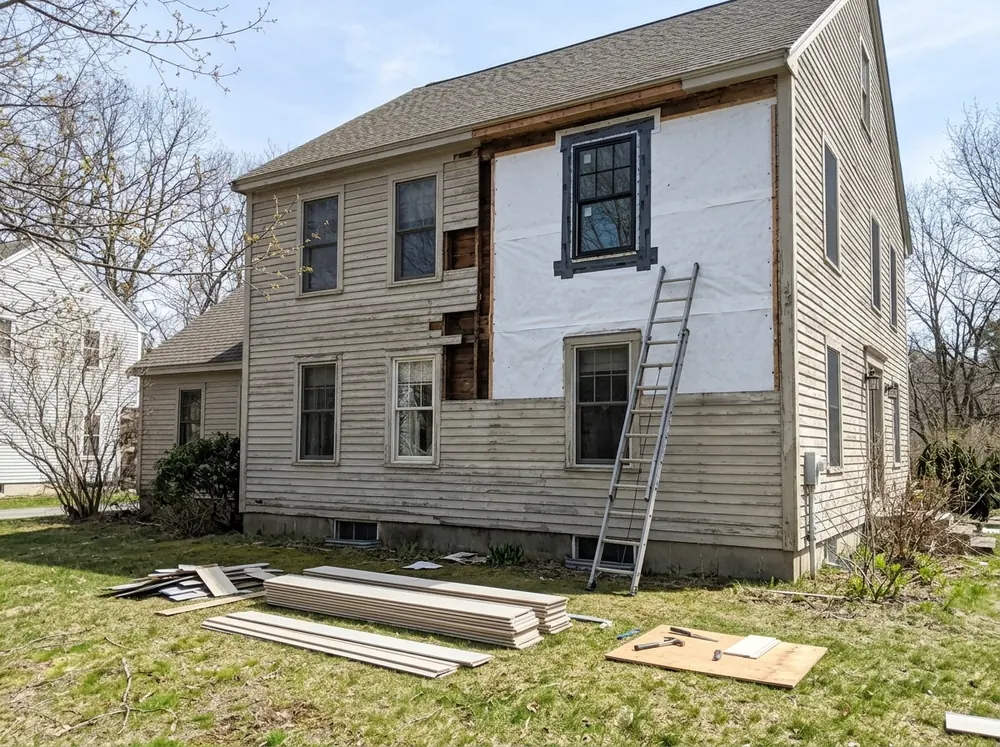
Nail-Fin New-Construction Windows in a Remodel
A new-construction window has a nailing flange, a lip with predrilled holes that runs around the frame. One large manufacturer describes it as the right choice for additions and major remodels, and for replacements where the siding is being removed or a buck (a new frame built inside the rough opening) is built. The fin makes the window easier to flash into the wall's drainage plane. The same guide notes these units cost more than inserts, both for the window and for the finish work around it.
Trim and Siding: What Each Method Disturbs
How much of the house gets opened up depends on the method:
- Insert: interior stops only; exterior trim, casing and siding stay as they are.
- Flangeless full-frame: the old frame comes out, interior trim usually comes off, siding stays.
- Nail-fin full-frame: siding and exterior trim come off around the opening and go back on afterward.
Manufacturer guidance suggests keeping the existing trim when only a few windows are being replaced, or when the house has original wood trim worth saving. For sash-only kits that keep the old frame and jambs, see window sash replacement.

Why Lowell homeowners call Lowell Window Replacement
- One independent window contractor gets your request
- Ask for the HIC number: MA contracts must show it
- Written contract on any job over $1,000
- The call and the referral are free
Lowell Building Permit for Window Replacement
Lowell's building permit page lists windows among the work that needs a building permit under the state building code. The residential application has its own "Replacement Windows" box with a line for the number of windows.
Who files
usually the contractor. The form asks for the Construction Supervisor License type, which includes a "WS Res Windows & Siding" category, and a workers' compensation affidavit; without the affidavit the permit is denied.Fee
based on total project cost. Alterations run $50 up to $1,000 plus $10 for each additional $1,000, so a $24,000 window job comes to about $280.Value of work
under 780 CMR 109.3, the city rejects applications that underestimate the job.Sign-off
the December 2025 permit report shows 11 residential window permits on $268,090 of declared work and $3,170 in fees, about $290 each, plus 5 certificates of completion at $75 apiece.Filing
the city's sources disagree. The online portal lists window permits, but the permit page says online permitting is unavailable and original applications go in person or by mail to Development Services at City Hall. Call Development Services to confirm how to file before you count on either.Skipping it
work without a permit is charged triple the initial fee, and the form warns of fines of up to $1,000.
A homeowner who pulls the permit gives up the state Guaranty Fund protection. In a historic review district, the Historic Board's approval comes first: see Historic Board review.
Choosing a Replacement Method in a Lowell House
About 43.9% of Lowell's housing units were built in 1939 or earlier, and 75.1% before 1980, so many openings still hold the original wood frames and sash-weight pockets. HomeAdvisor says replacing windows in older homes can double or triple the project price, because of custom sizes, rotted trim, counterweight removal and insulating the empty pockets.
Check the sill first
A good installer will probe the sill and lower jambs for rot before quoting an insert.Ask about the weights
If you go with inserts, ask in writing for the weights to come out and the pockets to be insulated.Mix methods
One house can take inserts in sound frames and full-frame units where the wood is soft.Plan for lead
A pre-1978 house needs lead-safe work for either method: federal rules never treat window replacement as minor repair.
Insert replacement is cheaper and quicker; full-frame costs more but lets the installer fix what's behind the old frame.