
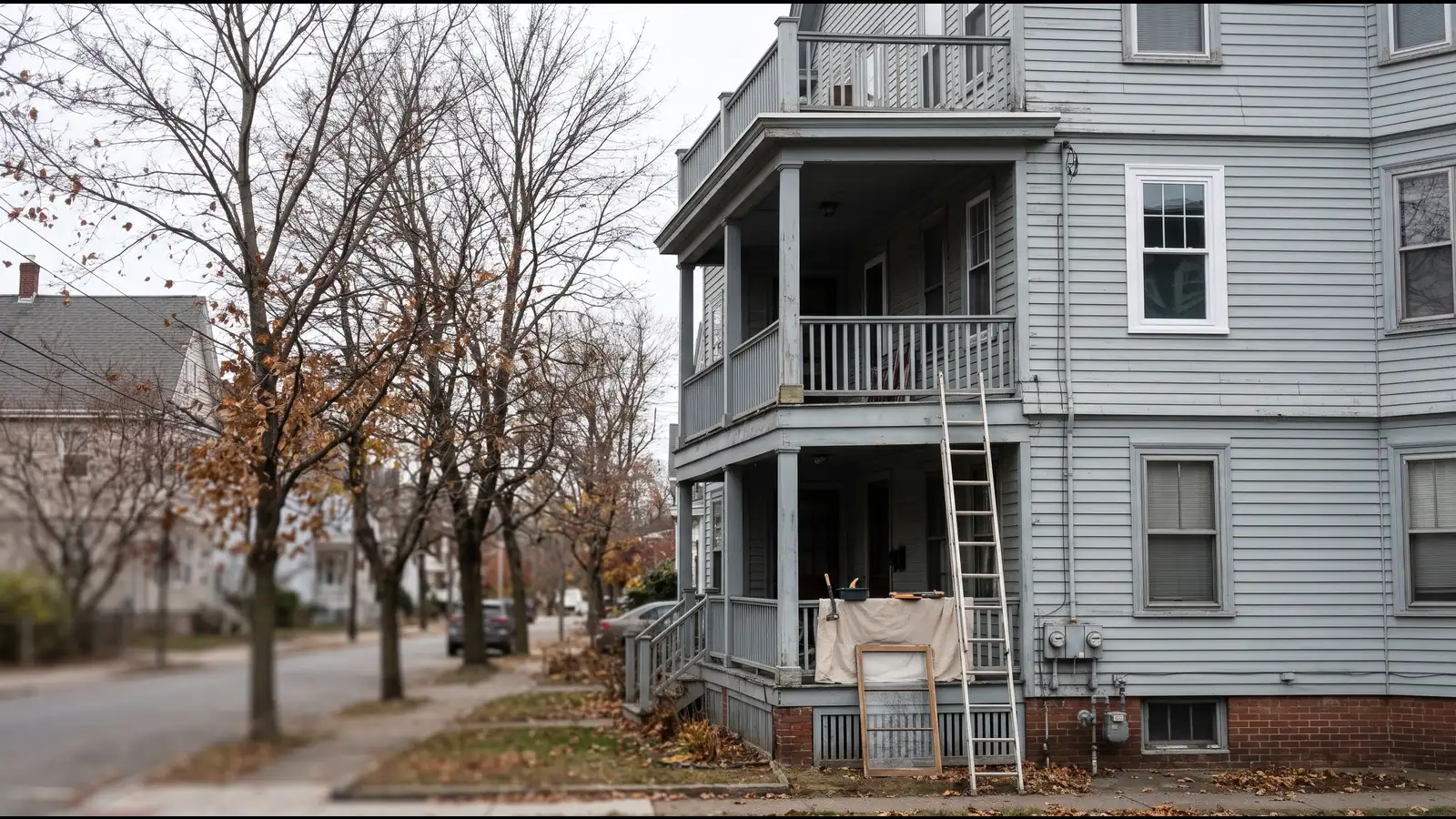
Awning Window Types and Where They Go
An awning window is hinged along the top and swings out from the bottom, usually on a crank or chain winder, with the screen on the inside. Open, the sash works like a small roof, so you can leave it cracked in a rainstorm. Awnings are smaller than most window styles, which is why they show up high on walls and in tight spots.
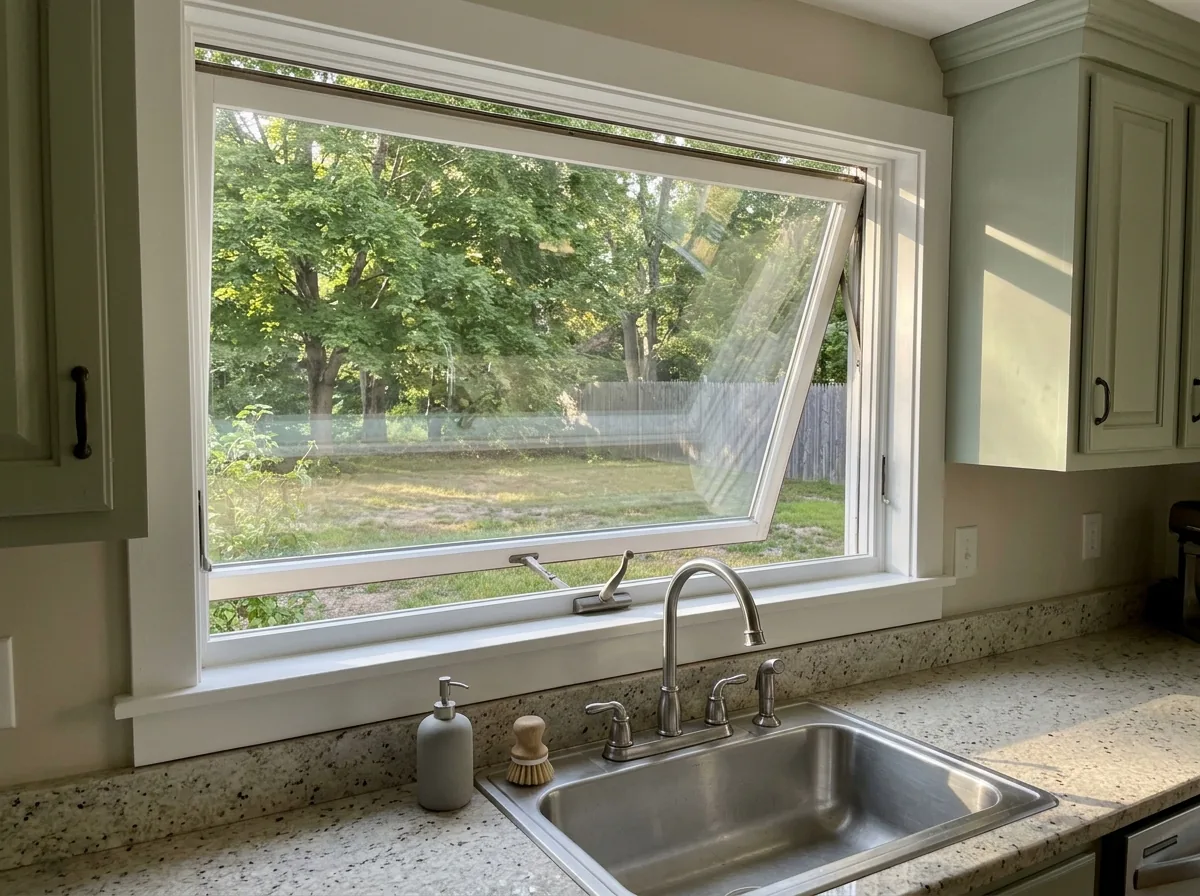
Awnings Over a Sink or Counter
Over a kitchen sink, the window sits behind a deep counter and a faucet, and lifting a hung sash from there is awkward. An awning set high on that wall opens with a crank, and because the sash tips out from the bottom, it can stay open for air while it keeps rain off the sill.
- Stock size: the cheapest option, but the opening has to match a standard size.
- Custom size: for an old opening that doesn't, expect the custom price and the longer order time above.
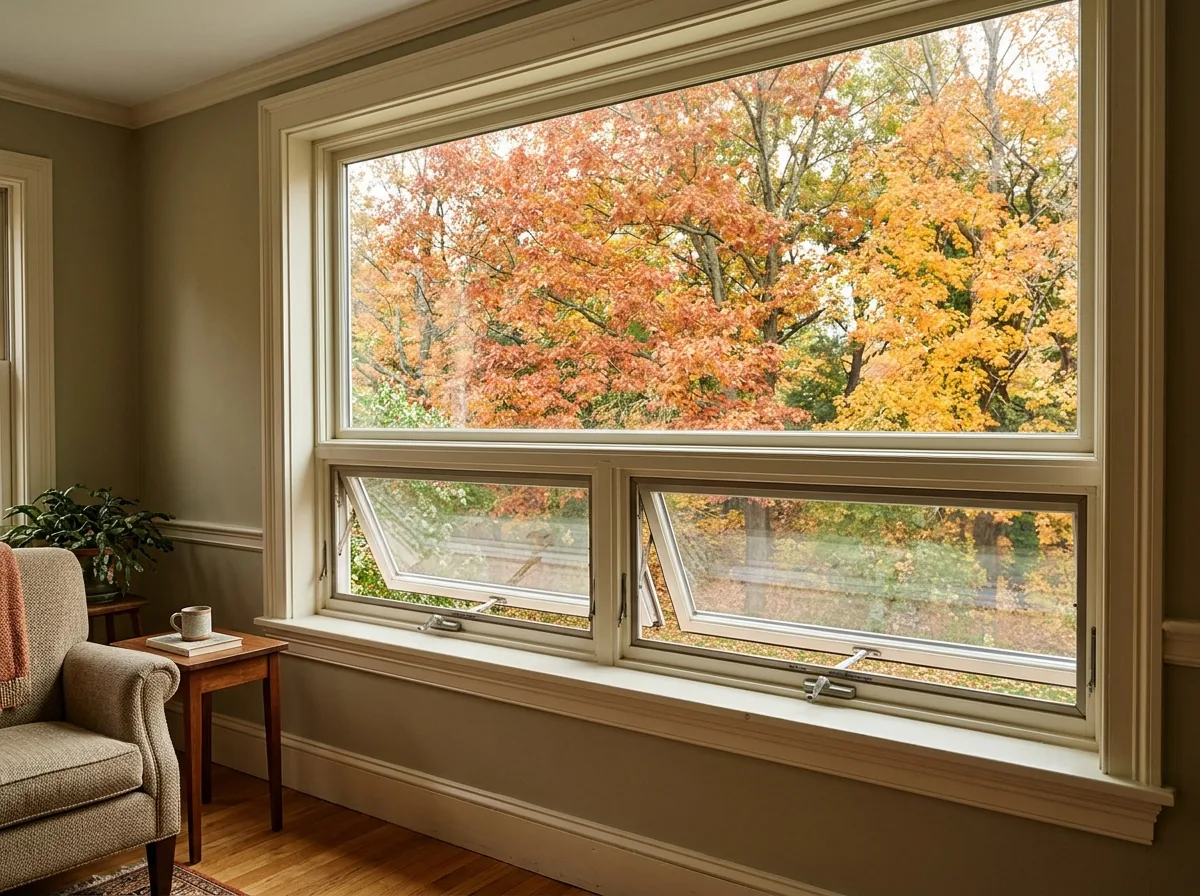
Awnings Stacked Under a Picture Window
Installers often set an awning or a pair of them under a large fixed pane, so the room keeps the view and still gets air. Awnings can also sit beside double-hungs. The fixed glass, its sizes and its prices are on the picture windows page.
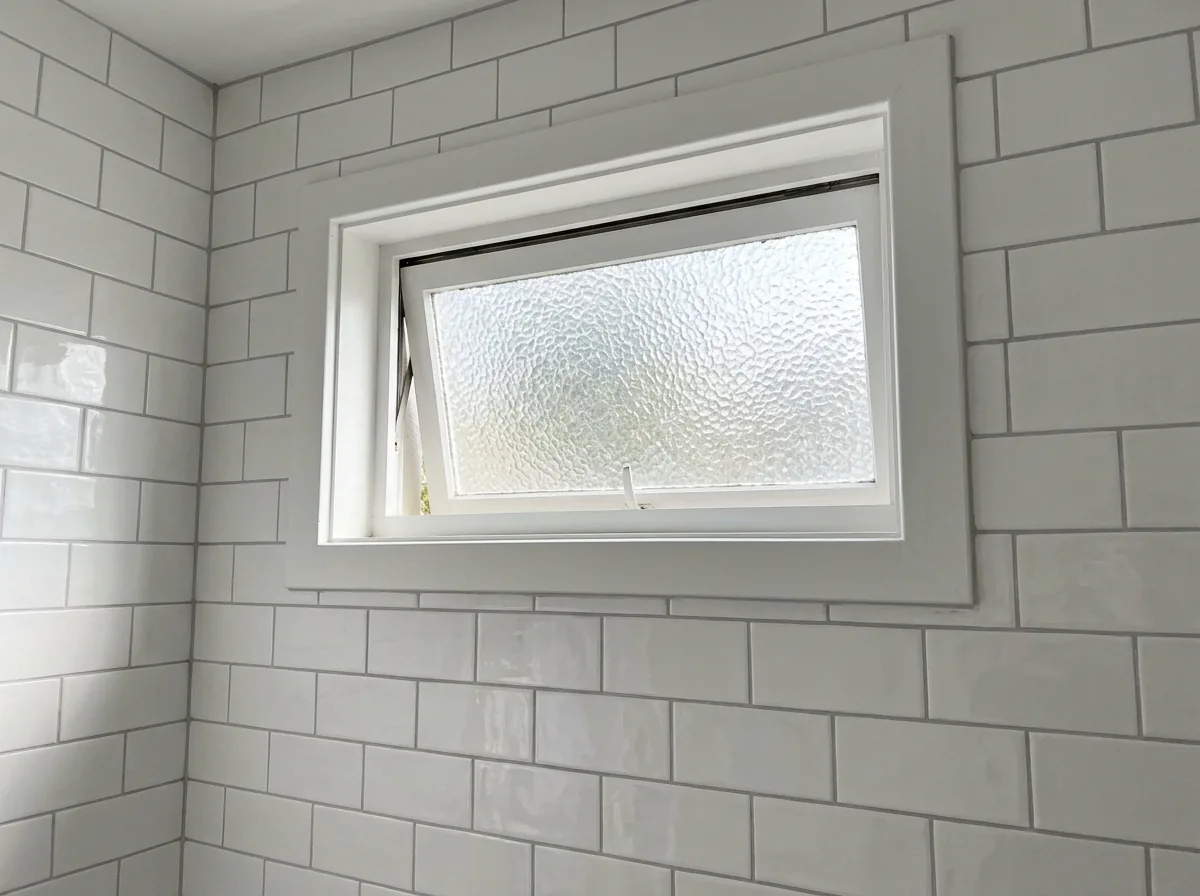
Bathroom Awnings With Obscure Glass
A bathroom awning can go high on the wall, above the sightline from the street or the house next door, and still open. Pair it with obscure glass and you get light without a view in. The bubble pattern, also called raindrop, is the one used most often in bathrooms. Glass near a tub or shower may also have to be tempered or laminated where the code calls for it.
Hopper Windows
A hopper is an awning turned upside down: the hinge is at the bottom and the top tips inward. Shut, the two look the same. Hoppers are common in basements because they can go in without a window well. Neither a hopper nor an awning opens wide enough to be used as an escape window. Prices for basement hoppers are on the basement windows page.
Why Lowell homeowners call Lowell Window Replacement
- One independent window contractor gets your request
- Ask for the HIC number: MA contracts must show it
- Written contract on any job over $1,000
- The call and the referral are free
Awning Window Replacement: What to Check
Where it swings
An open awning sticks out from the wall, so it can get in the way on a ground-floor walkway, porch or deck. This Old House suggests upper floors or spots where nobody walks past.Sill height upstairs
An awning set low on a second- or third-floor wall can fall under the fall-protection rule. Ask whether the operator limits how far the sash opens.Seal and hardware
A closed awning seals tightly, but its crank and hinges are moving parts that wear. Ask whether operator parts can be replaced on their own.Original window type
Putting awnings where hung sashes used to be, on a front wall in a historic district, goes through Historic Board review.
See casement windows for the side-hinged version of the same crank-out design.